 It's fair to say that Americans are far more adept at preaching freedom than practicing it. In all manner of ways, Americans routinely surrender freedoms and liberties and expect their fellow citizens to do the same. The tired and moronic refrain is inevitably: "if you're not doing anything wrong, you have nothing to hide".
This refrain, of course, is a surrender to the power of the state, in that it assumes that a) the state has the right to distinguish "wrong" personal behavior, and b) the state would never do "wrong" itself and is therefore the legitimate judge of all that is "right". Two very pre-1776 assumptions.
Drug tests are a perfect case-in-point. Most people support drug testing because they think they would pass the test. Their thought stops at that point. This logic would also allow us to round up Jews, because most of us aren't Jews. But that's beside the point.
The point is that drug tests are a widely-practiced police-state measure that tramples on the 4th and 5th amendments by their very nature.
But first, we must distinguish what drug tests are. Drug tests are, for all intents and purposes, marijuana tests. Since any thinking person will admit that alcohol is by far the most dangerous drug in any and every workplace, the absurdity is obvious.
I used to work in a warehouse with forklifts and tractor-trailers whizzing by all day and all night. The "drug" policy there did not prevent men from coming to work drunk and driving industrial equipment around all night (which some men did), but it DID prevent me from smoking a joint on the weekend.
So, since drug tests focus primarily on the most benign drug in our pharmacopoeia, while completely ignoring a drug whose use could injure or kill workers in any number of ways and in any number of workplaces, the mental decrepitude of the policy is obvious.
Now, for the constitution. The 4th amendment prohibits arbitrary search and seizure. Put simply, nobody can search my person or my property without documented reasoning that I have committed a crime. You can search me if I am fleeing from the direction of a recent armed robbery, but you cannot search me if you simply dislike the way I dress.
But drug tests require no proof, no evidence, no reasoning at all. There is no supposition that the testee has committed any crime, or has ever used a drug in his life, legal or otherwise. No, the only thing that makes a drug testee "suspicious" is that he wants a job.
So, if you want a job in this country, you have to prove that you have not violated the state's (idiotic and ignorant) drug policies. Wanting a job is probable cause. And all of a sudden, citizens have no rights and it is incumbent upon them to prove that they have not done something "wrong" rather than it being incumbent upon the state to prove that they have done something "wrong".
And here is where all the proto-fascists chime in: "well, if you're not doing anything wrong, you have nothing to worry about", and its insidious cousin, "well, if you're under suspicion, you must have done something wrong".
And what of the 5th amendment? The 5th amendment, among other things, tells us that no citizen can be forced to provide evidence against themselves. Drug testing shreds this amendment just as surely as it does the 4th.
Requiring a drug test of a job applicant means that a business is forcing that person to provide evidence against themselves. Even if that person has done nothing "wrong", they are forced to submit to a search and forced to provide evidence proving they have done nothing "wrong".
This is not just a problem for stoners, and not only scumbags have reason to fear it. It is just a piece of the architecture that American government and corporations have erected together, making most workplaces into places where the constitution simply does not apply.
It is all part of an edifice of intimidation that has been erected to deprive the American worker of his dignity and his self-worth. You want a job at Wal-Mart? That's fine, just promise you'll never form a union, you'll work unpaid overtime, you'll skip breaks, and you'll pee into a cup upon our request.
There used to be a time in this country when workers had a sense of their rights and were utterly and entirely unapologetic about telling management to piss off. I'll smoke to that.
 Being a substitute teacher in so-called "Level 1" schools is to be on the front lines of a disintegrating society. "Level 1" is shorthand for the worst of the worst. If the name makes no sense, perhaps we can assume it was coined by a product of these very schools.
Even a lifetime of living in "Level 1" neighborhoods and having "Level 1" neighbors cannot prepare a person for the reality of inner-city schools in 2010 America. By this I mean that I have lived and worked next to "Level 1" people my whole life, but even that could not prepare me for what I see every day in our public schools.
To be a 31-year old man returning to urban public schools for the first time since attending them in my youth is to be instantly morphed into an 80-year old Republican. I have been meanly and swiftly reduced to waxing reminiscent and nostalgic about a simpler, more civilized time. By which I mean 1993.
The amazing thing is not that students fight, or swear, or show a lack of innate interest in learning. The amazing thing is that these behaviors have been completely mainstreamed. What used to result in immediate suspension now, in the very same schools, barely registers as a disruption.
It used to be that fighting, for example, or calling a teacher a faggot or a bitch or something far, far worse would result in immediate suspension. Now, in the very same schools, this behavior is simply the cost of doing business, an annoyance rather than a red line.
What has changed? Certainly music and movies have become more coarse and explicit. But that is not the fundamental issue. When I was in these schools, the n-word was just as prevalent in rap music as it is today, but it was not a word that was heard spoken in the hallways. Now, it is a word I hear as often as I hear the word "the".
This word, and others equally vulgar, are common currency now. So are all other types of behavior that simply would not have been tolerated in the good old days, if there ever is such a thing.
The fundamental problem is two-fold. Firstly, adults (parents, guardians, and teachers) have tolerated this behavior. It doesn't take a doctorate in child psychology to know that if there is no consequence to calling an adult a bitch-ass motherfucker, then that behavior will occur far more often than it otherwise would.
Secondly, and most importantly, kids today are entirely incapable of dividing their identities. All of us today live atomized lives and are required to assume several different "identities" in any given day. It is possible to be a father, a son, a husband, a teacher, a shopper, a driver, and a friend in the course of a single day, for example.
What today's children lack is any understanding that different identities require different conduct. People my age understand that the language you use around your friends in a casual setting is very different from the language you would use towards your mother, or during a job interview, or when seated in a restaurant.
Those dividing lines are not acknowledged by youth today. To them, there is no sense that school is a different realm from home with an entirely different set of conduct, communication, and behavior. The sullen and hostile glares from students who are told they may not listen to headphones during class attests to this.
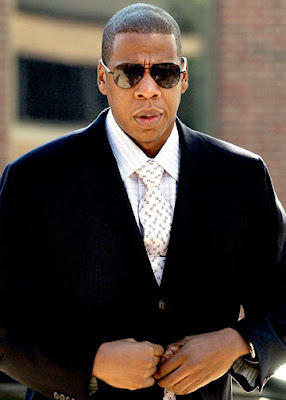
One hypothetical I use to (vainly) attempt to illustrate this for students is Jay-Z. When Jay-Z walked into a boardroom to negotiate the purchase of an NBA franchise, do we think he sagged his pants? Do we think he smoked or drank during the meeting? Do we think he referred to his prospective colleagues as "niggas"?
Two things are clear when I ask students to think about that scenario. Firstly, they are intrigued. Secondly, any serious consideration of the merits of the point I raise lasts about 5 seconds.
"Know thyself" is an old adage. In this day and age, however, that can be crippling, especially if the "self" you define yourself as is the "self" you are with no adults around. The costs of defining yourself that way are crippling. What students need to do today is to be able to incorporate different identities. They need to know thyselves.
 There are certain islands of American life and culture into which black folks were accepted even while most walks of life were closed to them.
The first, cynically enough, was the military. There is, I think, something cynical about a nation that would pride itself on "allowing" black folks to die for the flag well before those very folks were allowed to vote.
Around the the time the military was fully integrated in 1946, two more realms of our culture were opened gradually to blacks: music and sports. Music and sports, however gradually they were opened to black participation on equal terms, remain the twin loci of ghetto youth to this day.
Again, this can be said to be a bit cynical, since the dynamic remains that the best a poor black child can hope to do is to one day amuse and entertain everyone else. However, a bit of this angst is surely assuaged by the fact that young black men can now make tens of millions of dollars for doing nothing more than entertain white people.
Another realm which was opened up to blacks relatively early was TV and movies, but at first it was only a specific genre that welcomed blacks. In the 40', 50's, 60's, and onwards, blacks were rarely featured in any remotely empowering roles in TV or movies. The exception was science fiction.
Blacks, and minorities in general, were feature far more often and far more prominently in science fiction movies and TV shows far before more mainstream and more "realistic"fare.
Watch any old sci-fi movie or TV show, from Star Trek to Star Wars, from Planet of the Apes to Alien, and you will see black astronauts, female generals, and everything in between. They literally jump off the screen when compared to other mainstream movies and shows of the same eras, which are dominated exclusively by white men.
While I have never been interested in Star Trek per se, I can't help but notice that a black woman and a (gay) Asian man were officers on the spaceship when the show premiered in 1966. Vintage sci-fi has endless examples of empowered minorities of all stripes in a time when all other genres conspicuously lacked melanin and estrogen.
This speaks to the reason that sci-fi appeals to so many people. Sci-fi is about the future, so the authors can project aspirations that don't seem "realistic" to the audience. Flying cars. Talking computers. Black presidents. 2 out of 3 ain't bad.
By planting the seed in the audience's consciousness, could sci-fi material have played a part in the growing tolerance and inclusiveness in our culture? Perhaps. Or I suppose it could have been done simply for shock value. But I'm inclined to feel that it was indicative of an open-mindedness that was ahead of its time.
I recall the first time I ever saw a movie with a black president. It was Deep Impact, about an asteroid headed to destroy the earth. Morgan Freeman was the president. The most interesting thing about the film was that the asteroid actually hit earth and killed most people on the planet. No bottom-of-the-ninth Bruce Willis heroics to be found.
What was also interesting was that the president was black. This film was made at a time when the idea of a black president had been made at least plausible by recent speculation that Colin Powell would run in 1996.
In retrospect, it was a master-stroke by the writers; it appealed to liberals by portraying a black president as entirely realistic. And it appealed to everyone else by making it clear that the first black president would be the last, and hey, at least it was Morgan Freeman.
I have been convinced that tolerance for diversity is not inevitable; it takes pushing. It takes confrontation. These confrontations need not be overt, however. Sometimes they are accomplished passively, artfully, by the kids who got picked on in high school. Sometimes it takes a Trekkie.
 The President of the United States, 48 years ago this week, explaining why it's so important to vote in the midterm elections:
"75 percent of Republicans voted against my higher education bill, 84 percent of Republican senators opposed extended unemployment benefits, 81 percent and 95 percent of house Republicans voted against the redevelopment and public housing bills, respectively, and 80 percent of house Republicans resisted increasing the minimum wage."
"On a bill to provide medical care for our older citizens, 7/8 of the Republican senators voted No, just as their fathers before them had voted 90 percent against Social Security in the 1930's."
John F. Kennedy, October, 1962
 One blessing the United States has always enjoyed is that of relatively secure and passive neighbors. Neither Mexico nor Canada has ever given us any trouble, which has left us uniquely free to create trouble for ourselves.
Mexico today, however, is probably the most dangerous country in the world. And the drug cartels are the source of the huge majority of that violence, ranging from the usual street-level thuggery to political assassination of politicians and judges, and everything in between.
In this equation, the United States is the customer for most of these drugs and therefore part of the problem. But the problem is not primarily the fault of the Mexican drug lords, but of our own obscenely hypocritical Puritanism.
The Puritans are remembered in our dominant paradigm as intrepid souls who fled the oppression of Europe to come to the New World, where there was religious freedom. And while the Puritans were surely interested in own freedom, as we all are, they were supremely uninterested in anyone else's freedom to disagree with them.
"Freedom" for the Puritans meant "freedom to be a Puritan". They did not take kindly to Jews, for example. Or witches. There is nothing unique about this bigoted self-interest, of course. But the Puritan legacy continues today, and it fuels the drug war more than all the stoners and gangsters in the world.
The Puritans were scandalized by pleasure. Comfortable clothes, for example, were frowned upon, so we can imagine how they felt about sex and drugs. It strikes me that the only reason that marijuana, for example, is illegal is that there is a remnant of Puritanism remaining in our culture.
Prohibition is as close as we can come to a perfect case study. Prohibition actually made far more sense than criminalizing marijuana because alcohol is infinitely more physically and socially destructive than marijuana.
That being said, there are a few truths about our experiment with Prohibition that no rational person can refute.
Firstly, Prohibition prohibited Americans from drinking, but it did not prevent them from doing so. When alcohol was criminalized, Americans didn't stop drinking; they simply became criminals.
Secondly, criminalizing alcohol meant that sellers of alcohol were now criminals. And criminals, regardless of time or place, regulate their trade with violence. And so Prohibition's biggest legacy was not sobriety, but organized crime.
Half of the profits of the Mexican drug cartels are reaped from marijuana. We can therefore assume that roughly half of the violence is carried out in the distribution of marijuana.
So if marijuana were legal, the criminals would lose half of their power overnight. Thousands of lives south of our border would be saved. Americans would save millions of dollars by ending the absurd practice of imprisoning citizens for marijuana "crimes". And we would reap untold millions more by taxing and legally distributing marijuana.
The only thing which prevents this legal, moral, ethical, and economic triumph is Puritanism. One marvels at the schizophrenia of a society that would rather indulge barbaric drug cartels and criminalize millions of its own citizens than to acknowledge and regulate the reality that most Americans are not scandalized by the private pleasure of their neighbors.The final thread that the Puritans in this debate cling to is this argument: "if we legalize marijuana, everyone would start smoking marijuana all day every day".
Alcohol is legal. Do all of us drink all day every day? When Americans decide if they are going to try a drug, the legality of that drug is not part of their decision-making progress. Have you ever met anyone who said to you "I've never smoked marijuana because it's illegal"?
The decision to try or abstain from a drug, or a sexual encounter, or any type of new and potentially risky behavior, consists largely of an inner dialogue within one's self. If I choose not to use cocaine, it is not because the Puritans don't want me too. It's because I know better.
So the only conclusion is this: the Puritans hate free will. They don't trust themselves, and they certainly don't trust anyone else. They feel that the only thing saving us from barbaric hedonism and anarchy is a strict and unbending code of denial. They live out the belief that pleasure corrupts, and that we are helpless in the face of any temptation.
The Puritans don't want to live in a world where they can decide not to smoke marijuana. They want to live in a world where the full and awesome power of the state forbids them to do so.
In the final analysis, the Puritans actually cause the criminality and barbarity they so fear by vainly attempting to enforce their own dim view of mankind onto us all.
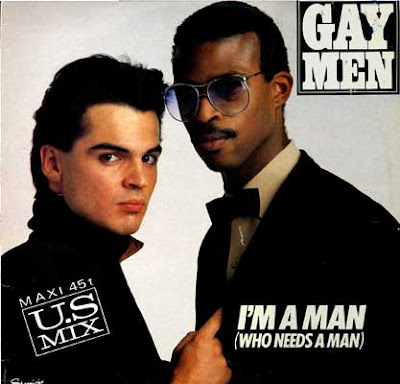 As "Don't Ask, Don't Tell" grinds its way slowly to extinction, we can be sure that congressional Republicans will put up one last desperate fight, one last full-throated frenzy to convince us all that civilization itself is doomed if open homosexuals serve in our military. And we can also be sure that many of those very Republicans will be gay.
The gay Republican is a tragic and very common occurrence. There are two types of gay men: there are gay men who are open and confident about their identity, and there are gay men who despise what they are and spend inordinate amounts of energy in attacking the gays that actually embrace their gayness.
There is a very interesting psychological dynamic at work here. Why are some of the most virulent gay haters gay themselves? What causes such sadomasochism? In these men, we witness the true danger of self-loathing.
Here's the thing about self-loathing gays: they deny that they are gay. They have sex with men, of course, but they deny that this makes them gay. To straight men and to gay men who are open and confident, it is obvious that a man who is attracted to and has sex with other men is gay. This is obvious to everybody except for the self-loathing gay.
Here is what the self-loathing gays seem to think: they seem to think that all men, ALL men, are naturally tempted to have sex with other men. So when these self-loathing gays give in to their natural temptation and have sex with a man, that doesn't mean they're gay; it just means that they slipped up and indulged their temptation.
Again, everybody except for self-loathing gays understands how ridiculous that is. We all have our temptations, of course. Married men, for example, may be tempted to cheat on their wives. But, assuming these men are straight, they are tempted by other women.
The self-loathing gay, however, is so gay, and so delusional, that he actually believes that all men secretly wish they could have male lovers, that it is the natural state of men, and that the only reason we're not ALL gay is that most of us don't give in to this universal temptation.
To the self-loathing gay, the only way a person can truly be "gay" is if they live openly as a gay. But if they just indulge in furtive and secretive sexual encounters, while pretending to the world to be straight, then that's different. But it's not. It's just self-destructive. And dangerous.
The self-loathing gay hates open gays so much because open gays are free. They don't lie to themselves and deny their own identity. The reason this is so dangerous is that it leaves to sadomasochism, which is incredibly destructive in political movements.
Self-loathing gays are sadists, because they revel in the oppression, abuse, and subjugation of other people. And they are masochists, because what they're really trying to destroy is part of themselves.
We have seen this psychological time bomb at play in many historical movements (e.g. Hitler, who physically resembled the people he exterminated far more than those he exalted).
The biggest threat to the gay rights movement in this nation right now is not straight people. Most people who are confident in their sexuality are not threatened by the sexuality of others. The biggest threat are those who deny themselves and seek to destroy the part of themselves that they perceive in others.
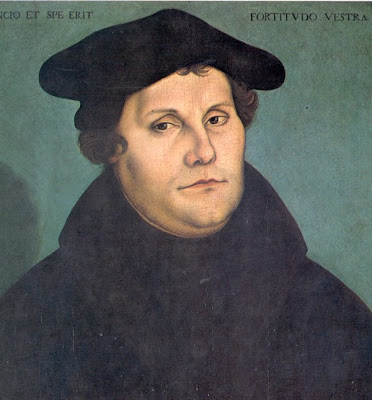 It is relatively accurate to say that the United States has Christian roots. It would be far more accurate, although not necessarily true, to say that the United States has Protestant roots. In other words, we are Christian, but we are not Catholic; ergo we are Protestants.
And Protestantism started with Luther. Thankfully, it didn't end with him.
Luther did indeed do mankind an inestimable service in pointing out that the papacy is not the Bible, and that the practice of priests literally selling tickets to heaven to rich folks wasn't exactly in keeping with the word of the Nazarene.
Luther was, it can be said, one of the 10 most influential thinkers and doers of Western civilization. But that doesn't necessarily mean he had a uniformly, or even mostly, positive influence. Influence is morally neutral; Hitler's higher on the list than Luther.
Here is what the dominant historical paradigm tells us about Martin Luther: he essentially invented freedom of religion by rejecting the premise that the Catholic Church was the "one true church". He encouraged people to think for themselves and to reject blind obedience to other mortals.
Luther, the paradigm tells us, invented Protestantism by encouraging people to think for themselves and the use their own God-given minds to make sense of the world. After Luther, Catholic nations such as Spain stagnated while newly Protestant nations such as England expanded and excelled.
There is, of course, much truth to this paradigm. But this paradigm, like many others, has less to do with what the man did while alive than it has to do with what subsequent writers think he stood for. And a look at what Luther actually did and said renders him much less sympathetic.
Firstly, for his theology. Luther was a Catholic, just as Christ was a Jew. He rightly pointed out grievous abuses and corruption condoned and carried out by his church. But where did he disagree with the Church's theology?
Luther's biggest sticking point was free will. He DID NOT believe it existed. That's right; Martin Luther did not believe that we have free will. It would be hard to think of a belief more anathema to American culture than that. Yet the inventor of Protestantism believed it.
So we instantly know that the dominant paradigm has a hole in it big enough to drive a cathedral through. The second major Protestant figure of this time was John Calvin. Calvin, like Luther, did not believe in free will. He believed in predestination. Some of us are "the elect", and the others.....well...they're not.
And what of the practical application of Luther's theology, which we look back on as so enlightened and empowering? Well, after Luther rose to prominence, there occurred the biggest popular uprising in the history of Europe, before or since.
One of Luther's better ideas was to print the Bible in languages that average people could actually read and speak. And poor folks, having had a chance for the first time in a thousand years to actually read the Bible, decided they weren't being treated very biblically by their betters. So they revolted.
And where did Luther come down? On the side of the kings. He excoriated the peasants in the strongest possible terms from his pulpit and advised the princes and kings to slaughter them en masse, which they did. Apparently, for Luther, the pope was an illegitimate authority, but the king was just fine.
3 days before Luther died, he wrote that all the Jews should be expelled from Germany. Good thing that idea never caught on.... In this, as well, Luther was ahead of his time.
Luther, we now know, was not the revolution. He did not believe in free will and he did not believe in the inherent quality of people, or even of Christians. What he did do, and what he do owe him for, is to crack open the door toward real reformation and liberation.
But let us not confuse this man; Martin Luther was no Martin Luther King.


